Detailed Description
Day 1 - 6 Beijing to Luang Namtha
We depart Beijing this afternoon, combining the group that has already been travelling through China with any other travellers who have joined in Beijing. We will take one of China's famous fast trains as it takes us to Chengdu, Sichuan province’s capital city and where the main highlight is the Giant Panda Breeding and Research Centre. Those who haven't been already will have a chance to visit.
From Chengdu we board another train to Kunming, the capital of Yunnan Province. Known as the ‘Spring City’, and sat nearly 2000m above sea-level, Kunming enjoys a milder climate than we have so far been used to in China, and walking its tree-lined boulevards makes for a pleasant change of pace, although we are still in China so don’t expect it to be slow or boring! You can check out the Tang Dynasty-era Pagodas or the Yuatong Temple, some 1200 years old and contrasting with the rapid pace of modern China that is changing the city.
Passing through Mengla, we then continue to the border with Laos and bid farewell to China as our journey moves on to our next destination and more of a backpacker vibe to our travels.
Day 7 - 13 Luang Namtha to Vang Vieng
We start to explore Laos now, known in antiquity as ‘The Land of a Million Elephants’, a country of verdant tropical landscapes dotted with thick, forested hills and sleepy towns and cities. Its rich history and varied culture make it a fantastic country to explore. Our first stop is Luang Namtha, with surrounding jungle and hills offering hikes, rafting and overnight village stays.
After a couple of nights in Luang Namtha we head to the former royal capital of Luang Prabang. In Luang Prabang, our base for the next four nights, we rejoin the Mekong River, and have the opportunity to explore its many temples, experience a wide range of colourful and varied cuisine and fully embrace South East Asia’s bustling backpacker scene. But for all its tourist appeal, the city has still retained its authenticity, partly due to its status as a UNESCO World Heritage site, but also because of the reverence paid to the city stemming from its role as a royal and religious centre through the region’s history. Here it is possible to hire a bicycle and explore the streets by yourself, visit the Pak Ou Caves take a cooking course, or just take a seat in one of the many bars or cafes and watch as Buddhist Monks, local traders and bewildered backpackers struggling with the heat and all other life unfolds in front of you. This is also where we will obtain our visas for Vietnam, which by now will be fast approaching.
Next stop, the riverside town of Vang Vieng, known for it's stunning natural scenery and outdoor activities you can spend the day, exploring many caves throughout the area, like Phu Kham or Tham Chang cave and enjoy swimming in the lagoons located within, there are opportunities for mountain biking, trekking, kayaking, rock climbing, inner tubing and much more.
Day 14 - 18 Vang Vieng to Savannaket
Leaving Vang Vieng we continue south to Vientiane, an unusually chilled-out capital city by South East Asian standards! There are many sights of interest, most notably the majestic Pha That Luang. Vientiane’s slow pace and subtle French character, a gentle reminder of its colonial past, make it well worth stopping for a couple of nights. This is also where we will obtain our visas for Vietnam, which by now will be fast approaching.
We leave the city behind us and return to the wilds of Laos as we reach Phu Hin Bun National Park where we take a longtail boat up the river into some spectacular caves and stay in a rustic bush lodge overlooking the river. We continue to follow the river south to Savannaket, a decent-sized town with a sense of faded colonial splendour as crumbling French buildings slowly give way to modern Laos. We have one last chance to enjoy a ‘Beer Lao’ before an early start the next morning to head east into Vietnam.
Day 19 - 25 Savannaket to Nha Trang
Hue, one of Vietnam’s cultural and religious centres is set on the banks of the Song Huong (Perfume River) and close to the coast. The Citadel(Kinh Thanh) and the opulent tombs of the Nguyen Emperors are UNESCO World Heritage Sites, and for those interested in more recent history there is an optional day trip to the Demilitarized Zone (DMZ) from the Vietnam War.
After our time in Hue we head south to Hoi An, known for its Old Town, criss-crossed by canals and multicultural history as a key trading port throughout Vietnam’s history. There are nearby white sandy beaches and also local cooking courses are available, but the city is perhaps best-known for its many tailors, so this is the place to get a bargain as you plan ahead to the cosmopolitan and modern cities that await us later in our trip! For those less sartorially-minded, there are plenty of water-based activities and adventure activities in the surrounding area, as well as good diving on offer.
We continue to beach hop along the popular backpacker route to the coastal resort city, Nha Trang known for its beaches, diving sites and offshore islands.
Day 26 - 28 Nha Trang to Ho Chi Minh City
Feeling fully relaxed and recharged, we reach Vietnam’s frenetic economic centre of Ho Chi Minh City (HCMC), also known as Saigon. This city pulsates 24/7, as countless motorbikes swarm through its crowded streets and there is plenty to keep us occupied for a couple of days. We will visit the War Remnants Museum and you will have time to see Reunification Palace, or take a day trip to the nearby Cu Chi Tunnels, where the Vietcong dug out an underground network of supply lines during the war. Also, not far from HCMC you can visit the Cao Dai Temple, a unique religious sect that fuses many different elements with colourful and memorable services that visitors are welcome to observe. There are also day trips available to the Mekong Delta, to see where this mighty river finally ends its long journey into the sea.
Day 29 - 33 Ho Chi Minh City to Battambang
HCMC is often a tiring and relentless experience with so much to do and its unremitting pace, so it’s a good thing that next up we have the more laid-back feel of Cambodia. A country with a tragic past, as the horrors of the Khmer Rouge are still within living memory, most visitors are amazed and inspired at the positivism and endeavour of the people who live in this stunning country, which is also home to one of the greatest ancient wonders to be found anywhere in the world: Angkor Wat.
First off though, we spend three nights in Phnom Penh, a city on the rise. Along with the splendour of Royal Palace and Silver Pagoda, there are more sombre reminders of Pol Pot’s brutal regime at the Tuol Sleng Genocide Museum, a former high school that was turned into a prison that has now been preserved and now serves as a chilling monument to a dark period, and also a respectful memorial to those who lost their lives. On the edge of town it is also possible to visit the Killing Fields, a similarly harrowing but valuable experience.
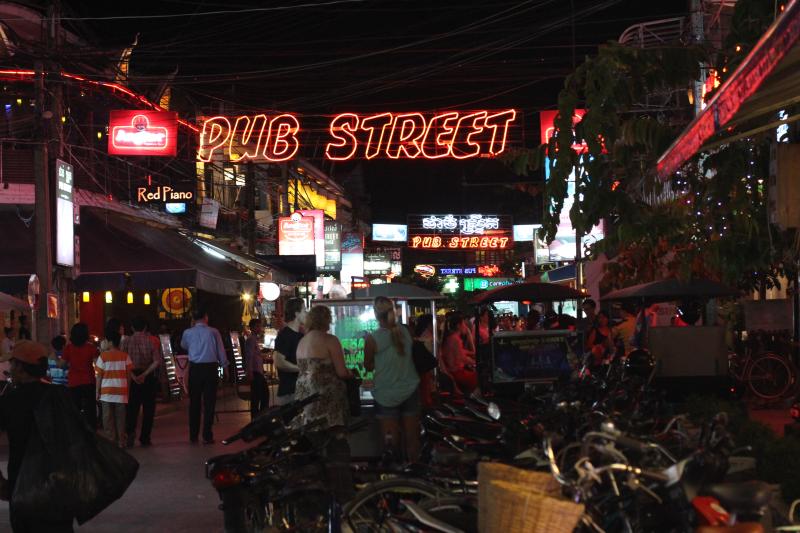
But this is in the past, and the local people in Phnom Penh have put it all behind them and live life at a frantic pace. With neon signs mixed in with many tastefully restored French Colonial buildings, it’s a great city to just wander around and enjoy fine cuisine and buzzing nightlife.
From Phnom Penh we stop for a couple of nights in Battambang, a city on the bank of the Sangkae River. This city has some more great temples and Buddhist shrines to explore, and the infamous ‘Bamboo Railway’, a truly unique and hair-raising experience!
Day 34 - 37 Battambang to Siem Reap
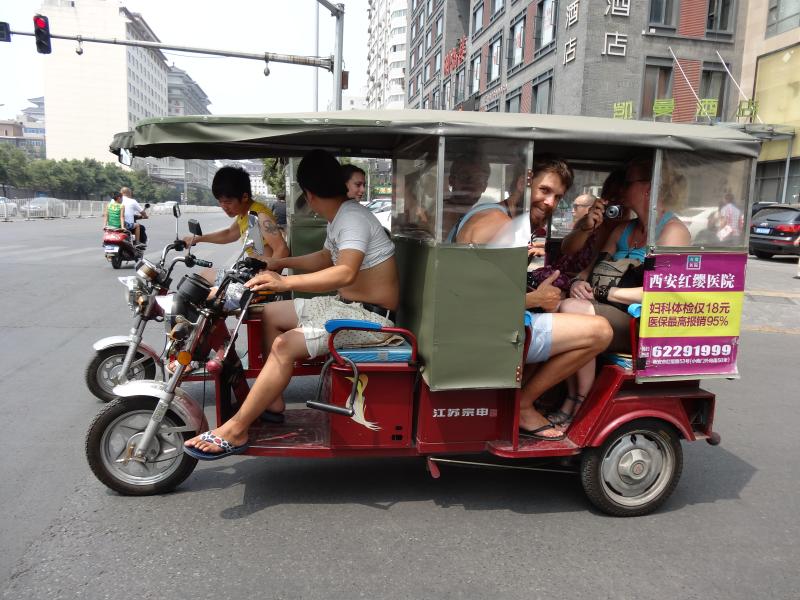
We leave Battambang by boat, cruising along the Tonle Sap lake upriver to Siem Reap, the gateway to Angkor Wat. This iconic abandoned temple, which adorns the national flag of Cambodia, is said to be the world’s largest religious monument. But there is far more to the whole site, known collectively as the Temples of Angkor, and away from the most famous site there are countless ruins to explore, many of which have been slowly reclaimed by the surrounding jungle and it doesn’t take too much effort to find yourself completely away from the crowds. We include entry for one day to the whole site, which can be explored either by tuk-tuk with a hired driver/guide for the day, or by yourself on bicycle, as it is only a short distance from Siem Reap itself.
The fact that Angkor Wat is so nearby gives Siem Reap the feel of a busy tourist town. This has obvious pitfalls, but also means it is a great place to enjoy a night out and bump into travellers from all over the world going in each and every direction.
Day 38 - 42 Siem Reap to Bangkok and Khao Sok
A full day’s drive and border crossing brings us to Bangkok, the vast and steamy capital of Thailand, known as the ‘Land of a Thousand Smiles’. Bangkok has plenty to keep us occupied, from glitzy shopping malls full of western brands to ancient palaces and monuments to the revered royal family. We include entry into the Grand Palace and Wat Phra Kaew, also known as the Temple of the Emerald Buddha. We spend three nights here so there is time explore the many canals on a Khlong Tour, visit one of the weekend Floating Markets, or take a stroll down the world famous Khao San Road, the start and end point to many travellers’ journeys through South East Asia.You also have the option to visit the small town of Kanchanaburi, which is known for the Bridge on the River Kwai. Built by Allied prisoners of war during the Second World War the bridge was immortalised in the film of the same name. It is possible to view and cross the bridge, and the nearby Thailand-Burma Railway Centre and the war cemeteries are also well worth visiting.
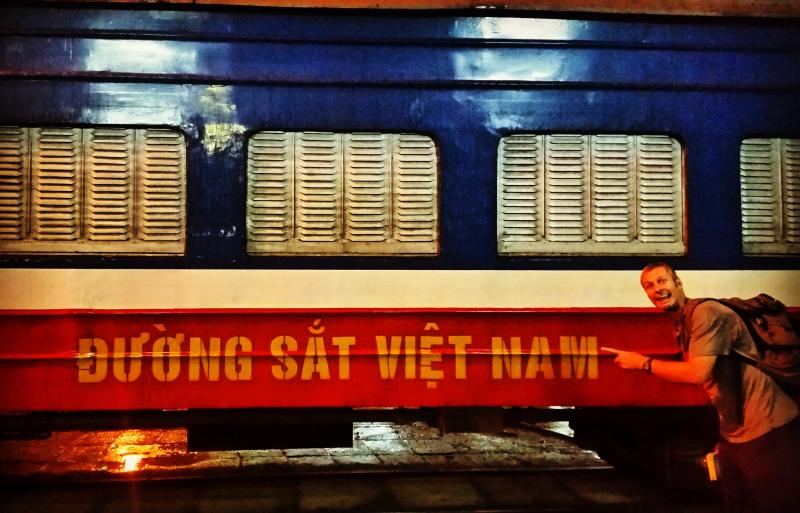
After our time in Bangkok we head south on an overnight train to Surit Thani, and transfer from there to the spectacular scenery of Khao Sok National Park. Here we spend some time relaxing with lots of optional activities available including cooking classes, various hikes in the forest, kayak trips on the lake and river, and much more.
Leaving Khao Sok, we head back to Surat Thani from where we begin our beach week on one of Thailand’s famous tropical islands!
Day 43 - 49 Surit Thani to Beach Week
After arriving back into Surit Thani we board one of the many ferries to take the short trip across to either Ko Pha-ngan or Ko Samui. These islands are famous, or perhaps infamous, for their Full Moon Parties and lively backpacker scene, but they are also home to some world-class scuba diving, quiet and idyllic white beaches with warm, inviting turquoise waters and it is easy to escape the crowds for some serious downtime!
The Thailand beach week is not included in the trip price, and you are free to make your own arrangements for your accommodation for this time, choosing where you’d like to stay and what you want to do! Return boat tickets to and from the islands are included.
Day 50 - 52 Thailand's beaches to Penang
After some refreshing time out, we all meet up again for the return trip to Surit Thani with an overnight stop in Hat Yai before entering Malaysia. This former British colony has an exotic blend of Malay, Indian, Chinese and European influences, which are reflected in the people, architecture and, perhaps most of all, its food! Our first stop is Penang, where we spend a couple of nights and will have free time to explore.
Day 53 - 56 Penang to Pulau Samosir
Leaving Malaysia we take a short flight to Medan, just across the Strait of Melacca on Sumatra, in Indonesia where you can explore the Grand Mosque or palace, or just sit back and soak in the city’s coruscating atmosphere (flights are not included and can be booked during the trip).
It is Sumatra’s lush jungles, one of the richest ecosystems in the world, steaming and at times rumbling volcanoes and blue crater lakes which make this part of the world fascinating and so different from everything else experienced on the expedition to date.
As we head into the interior of the world’s sixth largest island our destination is Lake Danau Toba, home of the Batak people. The lake covers an area of 1707 sq km and we head for the island in the middle of the lake called Pulau Samosir which is almost the same size as Singapore. The island offers many different options but the best way to experience it is to head off on a bike or motorbikes and explore the countryside, from swimming to trekking, to trying your hand at Indonesian cooking in one of the culinary schools and just enjoying the stunning scenery. The cool air, highland setting, with steep, pine-covered slopes, descending into the lake's deep blue water is great place to kick back and relax. The island's unique and fascinating Batak heritage, is evident in the clusters of sopo (tribal houses) with roofs that curve upwards, like buffalo horns, white-washed churches that dot the landscape, and ancient stones and monuments
For a bit of local flavour, visit a toddy shop and try a glass of 'tuak' (palm wine). The Batak people are known throughout Indonesia for their love of singing and playing music, and tuak is just the thing to get you fired up to join the singalong!
Day 57 - 58 Pulau Samosir to Bukit Lawang
The wildlife in all this area is abundant but our next destination’s big attraction is the orangutan feeding station at Bukit Lawang. Deep in the Sumatran jungle, these feeding stations have been created to support the indigenous orangutans as much of the normal habitat has been removed for agriculture or palm oil plantations. By creating these feeding stations, the orangutans do not have to compete with the locals by raiding their fields. We visit the feeding station and there is also the opportunity to trek through the jungle and hope to spot these incredible creatures in their natural environment.
The Gunung Leuser National Park and surrounding area has plenty else to offer, from exploring the ‘bat cave’, day or overnight guided hikes in the national park on the search for wild orangutans and the many other primates and larger mammals in the park. The chance to float back down to the starting point on an inner tube is a great way to finish your trek!
Day 59 - 67 Bukit Lawang to Melaka
Returning from Indonesia to Malaysia, we have time to explore the town of Georgetown on the island of Penang. Formerly the Malayan base for the historic East India Company, it’s a great spot to take a wander amongst the crumbling colonial buildings and check out the impressive street art. The other great thing is the food: Cambodia, Vietnam and Thailand all had their fantastic cuisine to offer, and Malaysia offers another different twist with influences from India strongly evident in Georgetown.
Departing Penang we cross the Malaysian peninsula to another tropical paradise, this time the famous island of Pulau Perhenthian; one of Malaysia’s showpiece islands, it is refreshingly undeveloped and is a prime spot for snorkelling or diving. Imagine going for a snorkel just off the shore and seeing turtles and sharks! Getting to the islands is also an exciting speed boat road across the bay.
After three nights of relaxed tropical bliss, we drag ourselves off the beach and it’s time to head to the big city again as we reach Kuala Lumpur, the capital of Malaysia and one of South East Asia’s most important economic centres. This sprawling city is typical of Malaysia, with a variety of neighbourhoods and districts, each representing the many cultures that have given Malaysia its distinctive character while also giving a nod to the direction of this emerging country. There is the colonial area around Merdeka Square, the chaos of Little India or Chinatown with its famous Jalan Petaling, where you can barter for all kinds of varied goods and trinkets, or the modern and dynamic area around the Golden Triangle, home to the iconic Petronas Towers (best viewed at night when they are lit up). For the best views of the city, KL Tower is only a short walk away.
After two nights in Kuala Lumpur we continue south to Melaka, our penultimate stop on the trip. This city’s history as a strategic trading post lends it a unique blend of Malay, Portuguese, Dutch and British flavours and influences. Take a boat trip on the Malacca River, explore the museums, temples and churches, climb the hill to St John’s Fort or take a trip out to the Melaka Zoo, considered to be the best in all of Malaysia.
Day 68 - 69 Singapore
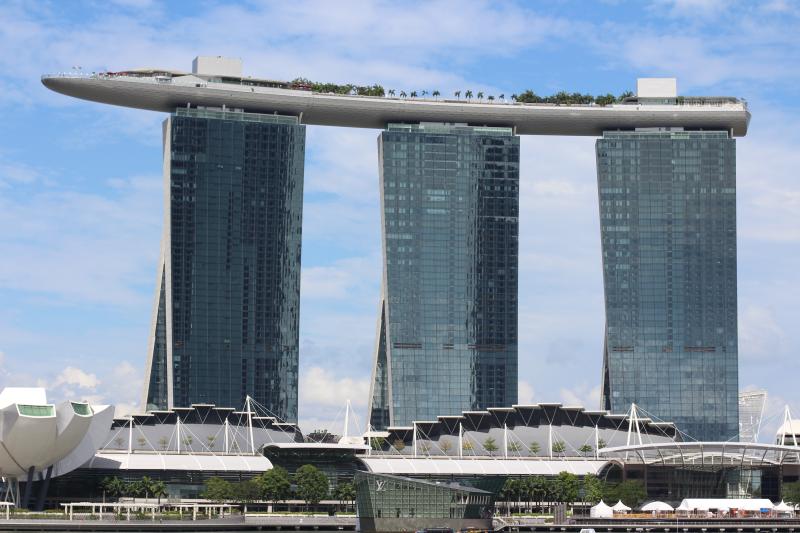
And so, in a flash, you will be arriving into Singapore, our final stop on this epic journey. The city has plenty to offer, from a world-class zoo, to endless shopping malls, and a national passion for food that is hard to match! Known as the ‘Lion City’ it is one of Asia's most affluent and vibrant, and a great place to spend a couple of days exploring. It’s also a great place to celebrate the end of our epic journey across Asia, and so in the spirit of overlanding this epic route we head to the Long Bar at the Raffles Hotel and raise a toast with a Singapore Sling and relive all the experiences that you have shared since your trip began