logo
0
Icon duration
duration

191 days

Icon Type
Tour Type

Excursion

Icon Location
Location

West, Southern and East Africa

Free Cancellation

up to 24 hours prior to departure

Accra to Nairobi (27 Weeks) Trans Africa

This expedition starting in West Africa and travelling through Central Africa

Highlights

Visit a fetish market to see the still thriving religion of Voodoo
Take a boat trip to Ganvie Stilted Village
Travel through some of the densest jungles and toughest terrains
Support the Drill Monkey and Chimpanzee rehabilitation centre
Climb the active volcano - Mount Cameroon
Game drive by day and relax at floodlit water holes by night in Etosha National Park
Enjoy many of the activities available in Namibia's adventure capital, Swakopmund
Explore the area of Sossusvlei - home to some of the world's highest sand dunes
Discover the enormity of Victoria Falls
Take a 4x4 safari through the Ngor

    Itinerary

    West Africa is a road less travelled and still a largely undiscovered area of Africa for tourism. Please understand that the first 9 weeks of your journey will be directly through this area of the continent and although we list our intended Itinerary below, please be aware that this is a rough guide and should be treated as such.

    Oasis Overland has run a Trans Africa Expedition virtually every year since 1997, and during this time, not one Trans Africa trip has run an identical itinerary through West Africa as far as Namibia.

    This is due to many reasons, including availability of visas, road conditions, embassy and border closures, political unrest, elections and instability, disease outbreaks, changing government travel advice and adverse weather conditions, just to name a few. We also hear about new, exciting places that may only now be possible to visit, and so try to include some new places on each trip for that reason too.

    Please therefore consider the itinerary shown as a guide and expect there to be some changes during your trip. This is all part of the experience of travelling through West Africa and one that makes this expedition such an epic journey that only a select few are willing to undertake.

    We will spend a number of days on the beaches near Accra where you can indulge in great seafood, and cold drinks. We will need to obtain several visas in Accra before travelling onto Togo.
    ​Travelling through Togo and Benin doesn't take long as they are only 50 miles wide. Voodoo is the main religion here, basing its beliefs in the power of the dead. You can visit an interesting fetish market, take a boat ride on lake Togo to Togoville, as well as sample good African restaurants in Lome the capital of Togo. We will be applying for some further visas for our onward travel in the capital.

    In Benin you can take local canoes out to Ganvie village - built on bamboo stilts on Lake Nakoue.

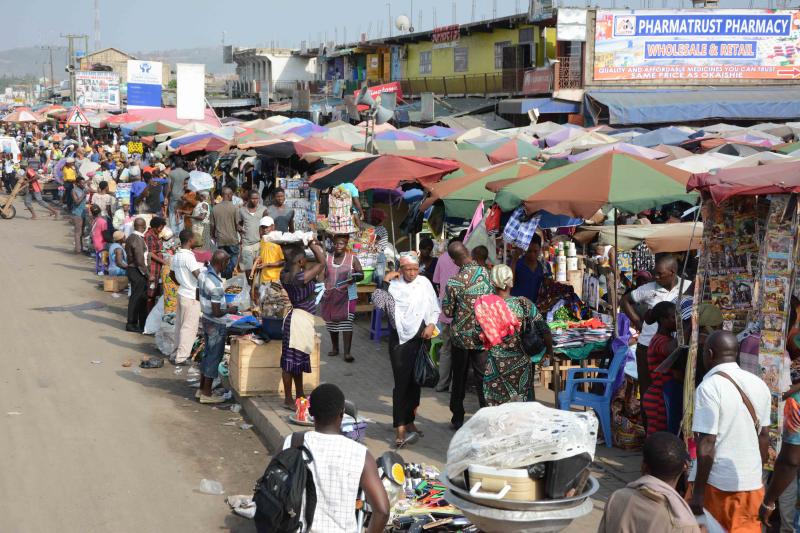
    Next we enter Nigeria, Africa's most populous country with well over 100 million people. The pace of life here tends to be more hectic than we have become used to on our overland adventure, full of hustle and bustle. Making our way east, our route will depend on whether we need to apply for any visas and which border crossing into Cameroon is open. Subject to our route, we may have the opportunity to visit a Drill Monkey and Chimpanzee rehabilitation centre, a project dedicated to rehabilitating and breeding drills, a primate closely related to baboons and mandrills, to be released back into the wild.

    Moving through mountainous and lush jungle, we enter Cameroon. Again, depending on which route we can take, we will travel to the foothills of Mount Cameroon, to spend a few days camping near Limbe and 6 Mile Beach. From here you can choose to trek up Mount Cameroon, visit a chimpanzee orphanage or relax on the beach.
    ​After chilling out on the beach, or if you were brave enough to tackle the mountain, we head inland to the capital city of Yaounde, where we may apply for a couple more visa's. You can sample fresh bread and amazing pastries from the countless bakeries, admire the roadside fresh flower stalls, or stock up on some supermarket treats! Bursting with art galleries, museums and various markets, this is an ideal place to restock your snack store and prepare for the demands of central Africa.

    When we depart city life, to travel south on the more rugged roads! We drive through lush jungle scenery, passing the occasional waterfall, before eventually reaching the lively market town of Ambam. Here we can replenish our food supplies before crossing the Ntem River into Gabon, a country that consists mostly of tropical rain forest. Our next stop is the beautiful Lope National Park, home to a population of elephants, buffalo and the famous central Africa drill monkeys. After a safari through the savanna lands, we continue south along dirt and mud roads toward the Republic of Congo. Along this leg of the Trans Africa overland trip we may encounter some challenging road conditions and situations on the whole of the route. Team work will definitely be needed if we are to tackle what may lay ahead - from clearing paths through water logged pot holes the size of the truck to only travelling a couple of miles in a day over wet and unkempt mud roads. These are some of the best memories you will take away with you.
    ​​One of the main highlights for most people who visit Congo is the friendliness of the people, particularly in the countryside. The open delight and welcome we receive while driving through these remote villages is really touching. While the first section of roads are rough dirt, once we reach the sealed roads it's a fast run towards the town of Dolisie.

    From Dolisie we will make our way west towards the ocean city of Pointe Noire. Two contrasting areas, the African quarter - where we see traffic jams, crowded streets and a bustling Grand Marche (market), the European Quarter quite the contrast with beach side bars and restaurants, noticeably oil is the source of the wealth. You will have time to explore the cities museums, railway and cathedrals or relax on the beaches. Departing Congo a transit through Cabinda, an exclave and province of Angola will bring us into Democratic Republic of Congo (formerly known as Zaire). Sandy tracks will eventually lead us into Muanda. Again tourists are foreign to this region and we attract attention everywhere we travel, dirt roads and potholes will direct us over the Congo River to the city of Mitadi and the gateway to Angola.
    Angola is still recovering from over two decades of civil war. As we travel south through the many small villages and communities - local people - especially children may never have seen a foreigner before. Military tanks litter the side of many roads in places. The country is slowly rebuilding its infrastructure and basic needs - with the capital of Luanda showing full sign of this slow progression. As Portuguese is the preferred language and hardly anyone we encounter will speak English - a lot of humorous improvisations with hands, face and voice are usually needed by all of us. After the southern town of Lubango and home to 'Christo Rei' a shrine overlooking the city as Christ the Redeemer looks over Rio, we head to the Namibian border for the next instalment of our Trans Africa overland adventure.
    ​Crossing into Namibia and into the region of the Owambo people - we pass through the country's second largest town - Ondangwa. This town is one of the main suppliers of beer to Northern Namibia - hopefully there will be enough left for us!

    We continue towards Etosha National Park - recognised as one of the world's greatest wildlife viewing areas. The semi desert is quite a contrast to the more fertile terrain we have been used to. Besides game drives we can also game watch by night at one of the floodlit water holes where we may well spot Rhino, Elephant and Giraffe among a host of other wildlife. From Etosha we visit a local Cheetah park before continuing on to the Brandberg Mountains in Demaraland.

    We then travel to the stunning Spitzkoppe Rock formations. Known as the Matterhorn of Namibia, the Spitzkoppe is part of the Erongo Mt range and was formed over 100 million years ago after the collapse of a gigantic volcano. The scenery is striking from every angle - even more stunning as the granite massifs turn red at sunset.

    Next stop is the world famous Cape Cross Seal Colony, where the sight of thousands of these mammals, as well as their accompanying pungent odour is remembered by all! The Cool Atlantic Ocean and the prominent Benguela current provide a perfect location for feeding and breeding for the Cape Fur Seal.

    For the next three days, our Africa overland trip will be based in Swakopmund - Namibia's adventure gateway. You can choose between a variety of activities and excursions here: spend a day deep sea fishing for shark and other game fish or head out to the desert and try quad biking and dune sledding. You can also go horse riding or get a birds eye view of the dramatic coastline - either by Sky diving from 10,000 feet or take a flight over the towering sand dunes in the area. In Swakopmund itself you can walk along miles of deserted beaches, visit the museum or relax in a cafe.

    A one day drive takes us to the Namib-Naukluft Park, a vast expanse of desert which contains some of the highest sand dunes in the world. At Sossusvlei we stop and explore this spectacular area and red dunes. Continuing south we enter the semi-desert, and wide-open countryside of cattle ranching until we arrive at one of Africa's most sensational natural features, Fish River Canyon. We stop here for a couple of hours to take in the awesome scenery.

    A couple of hours drive away we enter South Africa and cross the Orange River - a rich source of diamonds. We travel south through the Cederburg Wilderness Area, an area of rugged valleys and peaks - before getting to our final destination on this African adventure; the vibrant and cosmopolitan city of Cape Town. Our accommodation here will be in a backpackers hostel.
    Cape Town is one of the favourite stops on our Trans Africa overland trip as there is plenty to do in and around the Mother City, from climbing up Table Mountain to abseiling down it, diving with sharks (either in ocean cages - or at the Two Oceans Aquarium), scuba diving courses, a tour to Robben Island or a chance to revamp your wardrobe and head out on the town to one of the many hot-spots that Cape Town has to offer. Those on the 22 week trip from the UK leave us here, whilst others will join to continue the trip to Nairobi and Cairo.

    This free time in Cape Town is at your own cost, so you can decide what you want to do and where to stay! There may be less time here depending on any delays on the trip down from Accra.
    We depart from Cape Town taking a leisurely drive along the coastal road to the quaint coastal town of Betty's Bay in the Overberg and visit Stony Point Nature Reserve, home to a unique colony of African (Jackass) penguins. The Penguin Colony is one of only three mainland-based colonies in South Africa and for this reason it is treasured.

    We overnight in Hermanus/Gansbaai and the next day there are a number of marine options- Whale watching, Shark Cave Diving and Dyer Island Nature Reserve. From here we will head for the most southern tip of Africa at Cape Agulhas - which is the dividing line between the warm Indian Ocean and the cooler Atlantic Ocean. The seas around Cape Agulhas are very treacherous and have caused numerous shipwrecks. To help reduce fatalities the Cape Agulhas Lighthouse was built in 1848 and is the 2nd oldest working lighthouse in South Africa. From August to December Southern Right and Humpback Whales may be spotted along the coast - as they feed in the nutrient rich waters off the southern coast.

    From Cape Agulhas we pass through the Outeniqua Mountains to the Little Karoo - we will visit an Ostrich farm to learn more about the worlds largest bird. The Ostrich has been around for 8 million years and a feather was actually discovered in King Tutankhamun's tomb in Egypt. 97% of the world's population of Ostriches lives in the Karoo.

    We will also explore Cango Calcite Caves recognised as one of the world's finest network of Calcite caves. The bizarre formations of Stalagmites and Stalactites represent over a million years of slow formation.

    We spend two days winding our way along South Africa's famous Garden Route where there is a wealth of things to see and do. We travel through the popular resort of Knysna, located on a tranquil lagoon that is protected from the sea by two enormous cliffs known as 'the heads'. We visit the Tsitsikamma Forest, where you will be able to hike along the coast and view the crashing waves at the mouth of the scenic Storms River, and maybe spot dolphins and whales in the ocean. Optional excursions in this region include mountain biking, black water tubing, and the mother of all bungee jumps at Bloakrans Bridge - the highest jump in the world at 216 metres.

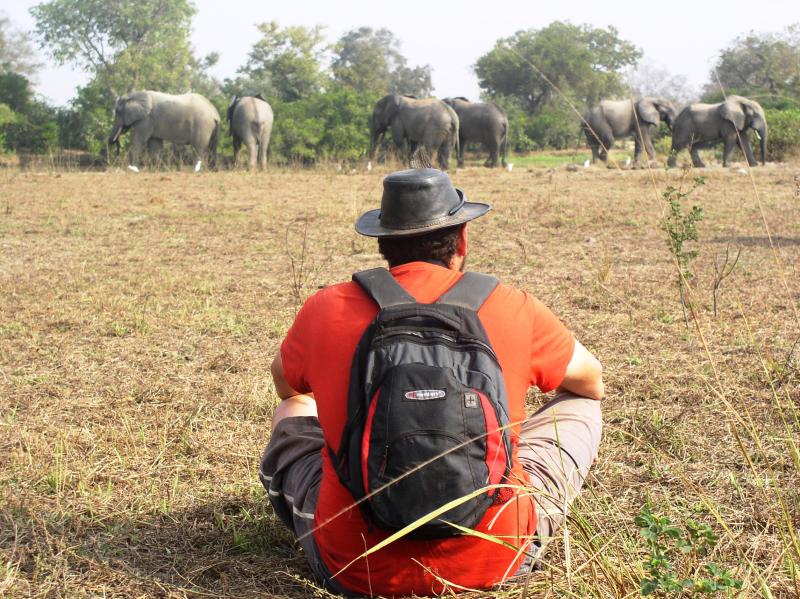
    From the Garden Route we head inland to Addo Elephant National Park which has recently been extended to include part of the coast and is now home to the BIG 7 - lion, rhino, elephant, leopard, buffalo, whale and shark! On our game drive we hope to spot some of the many elephant that the park is famous for, which are the most southerly population in Africa.

    Heading north we make our way towards the mountain Kingdom of Lesotho.
    Lesotho, often referred to as 'the kingdom in the sky'. This little country is completely surrounded by South Africa and is covered by mountains from 1000m to 3000m high. The scenery here is tremendous and the mountain air crisp and fresh. Here we will see Lesotho's horsemen dressed in their blankets and gumboots trotting around the hillsides. We spend a couple of nights at Malealea Lodge, Lesotho's most famous countryside retreat tucked up high in the mountains. Here there are isolated waterfalls, cool rock pools ideal for swimming, and peaceful hikes in the surrounding hills. This is also a great place to try pony trekking - one of the best ways to enjoy the scenery is atop a sure footed Lesotho pony.

    We drive through the lowlands of Lesotho and visit Thabo Bosiu or Mt. Moorosi with a local guide (time & weather permitting). This mountain stronghold was the home of Chief Moshoeshoe, the founder of the Basotho nation. We continue through Lesotho's tiny capital Maseru, and re-enter South Africa.

    Royal Natal National Park on the edge of the Drakensburg Mountains has an impressive natural Amphitheatre of massive rock walls. The Tugela River plunges spectacularly over the edge of the Amphitheatre wall, dropping around 800m through a series of five falls. There are over 130km of walking trails around the park-many of which are easy, half day strolls, through beautiful countryside of grassland dotted with patches of yellowwood forest and proteas set against the stunning backdrop of the Amphitheatre.

    Heading east now, we reach the coast and the small town of St Lucia, famous for having the largest estuary in South Africa, plus the country’s highest concentration of hippos and crocodiles. Indeed the hippos can sometimes be seen walking through the streets at night. Boat trips to see the hippos and more wildlife are available, as well as safaris into the nearby iSamangaliso wetlands and Hluhluwe/iMfolozi National Park. Next we head north for the tiny country of Eswatini
    While in Eswatini we visit the Miliwane Wildlife Sanctuary from where you can take walking, horseback or mountain bike safaris amongst the abundant wildlife. Another hike is available at Sibehe Rock, one of southern Africa’s most impressive geological features.

    From Eswatini we head into the southern extent of the iconic Kruger National Park to search for the Big 5 in one of the world’s best wildlife areas. We will also drive part of the Panorama Route before crossing into Mozambique.

    Our first stop is then in the lively capital Maputo, which is home to Portuguese colonial architecture, a fortress , cathedral and art museum all worth visiting. In the evenings we can take advantage of Maputo’s reputation as one of the best places to go out in southern Africa, visiting some of the salsa bars, sidewalk cafes and nightclubs.
    Leaving Maputo we head up the coast to the port towns of Xai-Xai which sits by the banks of the Limpopo River. There are good beaches with a coral reef just off shore providing protected swimming and snorkelling waters. The popular town of Vilankulos is next and we spend a few days here relaxing and taking advantage of the activities on offer. These include local dhow cruises, and snorkelling and diving safaris into the Bazaruto National Park. This can be a good place to see manta rays, whale sharks, turtles and hump back whales in season. It is also one of the few sites where the rare Dugong lives.
    Zimbabwe is our next destination, and Gonarezhou National Park, named ‘The Place of Elephants’. As well as over 11,000 elephants, the park hosts a wide range of other wildlife that can be seen on safari.

    We make our way through the Eastern Highlands of Zimbabwe, and visit Chimanimani National Park where you have the opportunity to take a hike through the mountain wilderness area, or hike to the nearby bridal veil falls, or simply enjoying the stunning surroundings from this sleepy village whilst strolling through the village market. We may also have time to visit Vumba Botanic Gardens.

    Another stop is at the Great Zimbabwe Ruins, once the greatest medieval city in Sub Saharan Africa and where the name Zimbabwe is derived, literally meaning house of stone. We then travel across Mashonaland to Bulawayo where you have the option for a day to venture into Matobo National Park with a local safari company. You will have a unique chance to get out on foot to try and spot the elusive Black Rhino - amongst other game. There is also the opportunity to visit Cecil Rhodes' grave and Ancient Rock Paintings.
    We leave Zimbabwe and cross into Botswana, first passing the town of Nata with its bird sanctuary and then driving past the Nxai Pan National Park and Makgadikgadi Pans National Park. These salt pans are the largest in the world, and an eerie and awe inspiring sight.

    We’ll continue on the Trans-Kalahari highway towards Maun, the gateway to the Okavango Delta. Here you will have an opportunity to leave the truck to venture into the Okavango Delta. Local poler guides will navigate the extensive waterways using canoes similar to their traditional Mokoro's (dug out canoes). This is a great experience - and the best way to have a chance of seeing the elusive wildlife of this unique desert oasis. You will have a number of opportunities to go on game walks with rangers - giving you the chance to see elephant, crocodile and hippo up close and personal. The Okavango Delta is one of the world's largest inland waterways and its calming serenity will leave those who experience it feeling supremely relaxed. There is also the opportunity to experience the heights of African adventure travel too: see the delta from the air during an hour-long flight.

    From Maun we head north and cross into Namibia and explore the Caprivi Strip. This is a narrow strip of land between Botswana and Angola & Zambia, comprising the head of the Okavango Delta where more boat trips and safaris are available. Heading east we re-enter Botswana and spend the night on the outskirts of the Chobe National Park - famous for its hordes of Elephants, as well as an abundance of other wildlife. You will have a chance to spend the afternoon on the Chobe River - a less intrusive way to view game and wildlife - as well as the Namibian frontier across the river. Crossing into Zambia - we stop for several days at Livingstone, right next to one of the adventure playgrounds of the world - Victoria Falls.
    There is something here for everyone in Victoria Falls; A day trip over the Victoria Falls bridge to view the falls from Zimbabwe, Flight of Angels - a great way to get a birds eye view of the falls in a light aircraft or helicopter, Sunset Boat Cruises or a more sedate Canoe trip, to the adrenaline packed Gorge Swing, Abseil or a chance to experience one of the highest commercial Bungee Jumps in the world.

    After your adrenaline has been spent, we will head north through Zambia to Lake Kariba which is the largest artificial lake in the world, and also has the biggest man-made dam on the planet too, 226km long and up to 40km wide! At Siavonga there is the option to spend the night on a houseboat on the lake, watching over crocodiles and hippos and perhaps doing some fishing.

    Further north we stop at South Luangwa National Park which has one of biggest concentrations of wildlife in all of Africa, especially around the Luangwa River and its oxbow lagoons. The park is well known for its walking safaris, and one of the few places you can get up close with such a wide range of wildlife in Africa on foot.

    We leave Zambia now and cross into Malawi.
    Our first stop in Malawi is the capital Lilongwe in the south of the country where we stop for the night. This will give you the opportunity to post gifts home or check out the local markets.

    Passing through lush mountainous landscape and plantations we are soon following the coast of Lake Malawi - the country’s most dominant natural feature. Camping in Malawi sums up the spirit of an Africa overland trip with Oasis. We spend several days at friendly laid back campsites where most people choose to relax on the sandy beaches or try their hand at scuba diving , snorkelling or windsurfing as we follow the lakeshore north. If you are more inclined to just relax - then there is no better place than on the shores of Lake Malawi. This really is a warm friendly country - making it easy to wander off and meet up with your local hosts in one of the many villages or schools nearby. You can view first hand the talent of the local artisans and purchase some exquisite pieces of furniture and carvings out of ebony and mahogany.

    The next country on our journey is Tanzania, and after a day and half drive we pass through the peaceful Mikumi National Park. African safari travel is synonymous with wildlife, and in this national park we usually see Elephant, Giraffe, Zebra and Antelope from the roadside. From here we continue travelling through the interesting and mountainous hinterland of Tanzania.

    Our route north then brings us to Dar Es Salaam where our truck is based in a campsite on a beautiful Indian Ocean beach. From here you will take the ferry out to Zanzibar Island for four nights and venture into the narrow bustling streets of Stone Town and its famous spice markets, old slave forts and dungeons. There is also time to relax on Zanzibar's famous white beaches, scuba dive or snorkel and swim with dolphins- before returning to Dar Es Salaam.
    After leaving Dar Es Salaam we pass a number of small towns and villages along the way and, if we are lucky, we may see the towering peak of Kilimanjaro. We will stop off at Marangu where you have the opportunity to climb to Kilimanjaro base camp or take a walk through the lush surroundings passing through coffee plantations, rivers, waterfalls, caves and visiting a local blacksmith (there is not time to do the full summit climb unless you miss the Serengeti safari option).

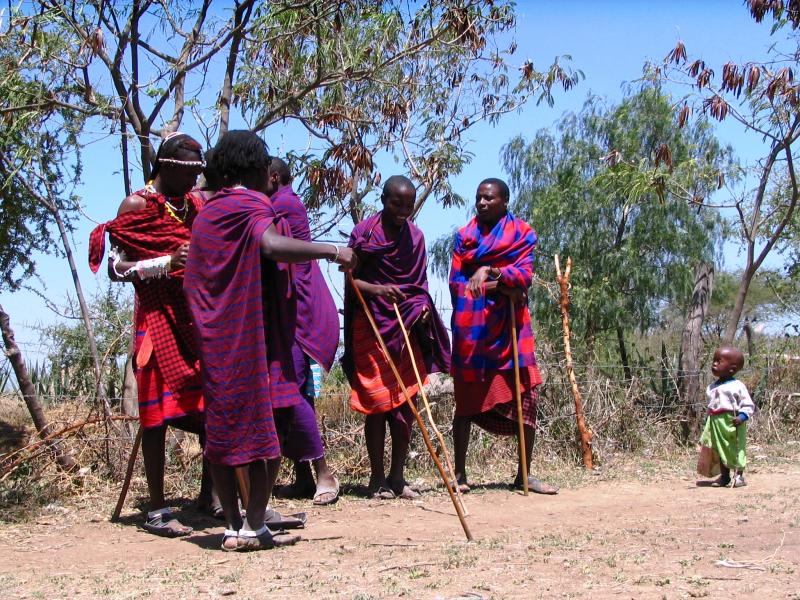
    We then continue to Arusha, and while at our camp on the outskirts of Arusha you have the option to book an add-on and travel with our local African safari partners through the Ngorongoro Crater and the Serengeti National Park. In these parks you will have the opportunity to view the abundant wildlife including Elephant, Lion, Cheetah, White Rhino, Buffalo, Hippo, Antelope, Crocodile and Pink Flamingos and of course the famous migrating Wildebeest. For those who wish - there is an option to visit a local Maasai Village and learn about their culture and way of life.
    Our route takes us west now, passing to the south of Lake Victoria and after a couple of bush camps we arrive into Burundi. We will stop at Gishora Village to see and hear more about Burundi’s famous drummers. These drums were symbols of power during the monarchy, beaten during special events and are an important part of the country’s heritage. We then arrive at Bumumbura, a port city on Lake Tanganyika, where the country’s main export, coffee, is shipped from. Boat trips through Rusizi National Park here provide viewings of crocodiles and hippos as well as many water birds. The lake also has many beautiful beaches and laid back villages to explore.

    Leaving Burundi now, we cross into Rwanda and drive to the capital Kigali where you can visit the Genocide Memorial
    The hills of Rwanda are next, as we spend a couple of days at the small, friendly town of Musanze on the edge of Volcanoes National Park. Here you can take optional treks into the forest to see the famous Golden Moneys, visit the Musanze caves and several hiking trails, or take a village tour throughout the area where you can see first hand production of local Banana beer.

    We’ll then head out of the hills and cross the border into Uganda, where our first stop is at the village of Kabale which will give you the opportunity to trek the Mountain Gorillas and visit the beautiful Lake Bunyonyi.

    Bwindi Impenetrable Forest National Park and Mgahinga Gorilla National Park are home to several families of Highland Mountain Gorillas. Getting up close to these amazing creatures is a truly a once in a lifetime experience and one of the highlights of the trip. You have the opportunity to trek to see the Gorillas in Uganda (bookable as an Add on). It is estimated that only around 700 of these gentle giants remain. This mountainous area on the borders of Rwanda, Uganda and Zaire (now renamed Democratic Republic of Congo) is their only natural habitat and they are periodically threatened by poachers and political instability in the area. One permit allows you to spend about 50 to 60 minutes with one of the gorilla families. Trekking to find them in groups of 8 people can take anywhere from half an hour to 5 hours. The organisations and well-trained guides that continually monitor and protect the families are conscientious and responsible.

    (Due to the popularity of Trekking to the Mountain Gorillas and the limited availability of obtaining Trekking Permits, those booking late may need to do the Gorilla trek in Rwanda in Volcanos National Park, which may come at an additional cost - you will be advised in advance).

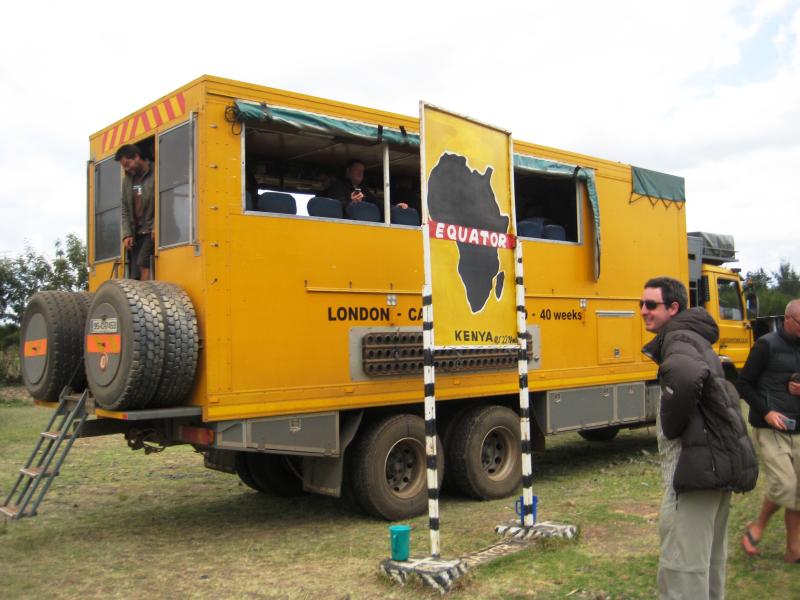
    We head East again now, and spend a night at Lake Mburo National Park, perhaps taking a nighttime safari drive, before driving onwards through swamps, patches of forest and fertile green countryside. As we travel through Uganda, we'll pass through a number of small towns and villages; Mpigi, where you will see roadside stalls manufacturing and selling traditional musical instruments; Kyazanga, where we can buy fresh rotisserie and roasted meat and vegetables, as well as roasted plantain bananas. We will also be able to make a photo stop where our route crosses the Equator on the way to Kampala. Kampala has had a turbulent past, but these days it is a friendly and safe city. We have some free time to spend in local cafes and nightspots - where you can get to know the local people.
    We camp next near Jinja - Uganda's adventure playground. Here, on the edge of Lake Victoria, the Nile begins its 6700km journey to the sea. We spend the next few days downstream from the source of the Nile. This is a spectacular area, and a superb place to go whitewater rafting or kayaking. You can also organise quad biking , horse riding or a visit to a local education project.

    Our next highlight is the spectacular Sipi Falls. There are three waterfalls here on the Sipi River as it cascades into the Kyoga Basin from the slopes of Mount Elgon. The highest is just under 100m and there is an exciting abseiling option available here. After leaving the Sipi Falls we cross into Kenya and Lake Nakuru National Park - home to a wide variety of wildlife including Black Rhino, Hippo, Lion, Leopard, Hyena and Giraffe. However, Nakuru is a soda lake and most famous for its pink inhabitants, a flock of almost a million Pink Flamingos which feed noisily along the shoreline.

    Finally, the group will all go on a morning and afternoon game drive in 4x4 safari vehicles with local guides in one of the world's most famous National Parks, the Maasai Mara. Here you will have the opportunity to look out for all its incredible wildlife before making our way back to Nairobi, arriving in the early evening.
    Your adventure will finish after breakfast.

    There is plenty to see and do in Nairobi - why not ​get up close to Africa’s tallest mammal at Langata Giraffe Centre or visit the David Sheldrick Elephant Orphanage, where Oasis sponsor Kamboyo, an orphaned elephant

    included with

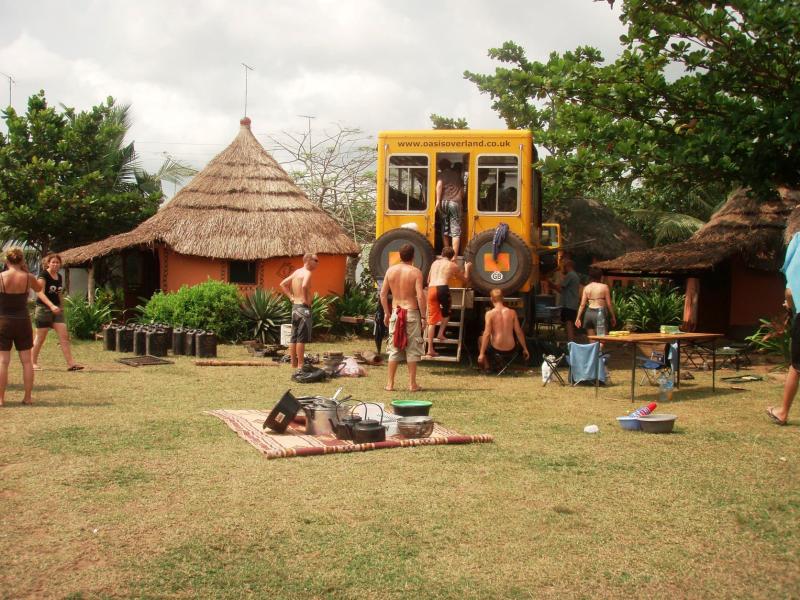
    Accommodation - approx. 97% camping & 3% simple hostels/hotels
    Boat trip to Ganvie Stilt Village
    Etosha National Park
    Cape Cross Seal Colony
    Cheetah Park
    Spitzkoppe Rock formations
    Sossusvlei Sand Dunes
    Fish River Canyon
    Stony Point Penguin Colony
    Cape Agulhas
    Cango Calcite Caves
    Ostrich farm
    Garden Route
    Addo Elephant National Park - Game drive
    Lesotho
    Drakensburg Mountains
    Royal Natal National Park
    Chobe National Park
    Private Game Ranch
    Lake Malawi village walk
    Mikumi National Park
    Return ferry to Zanzibar
    4 nights accommodation on Zanzibar
    Marangu - the foothills of Mt Kilimanjaro
    Lake Nakuru National Park and game drive
    Masai Mara game drives
    Meals - approx. 65%
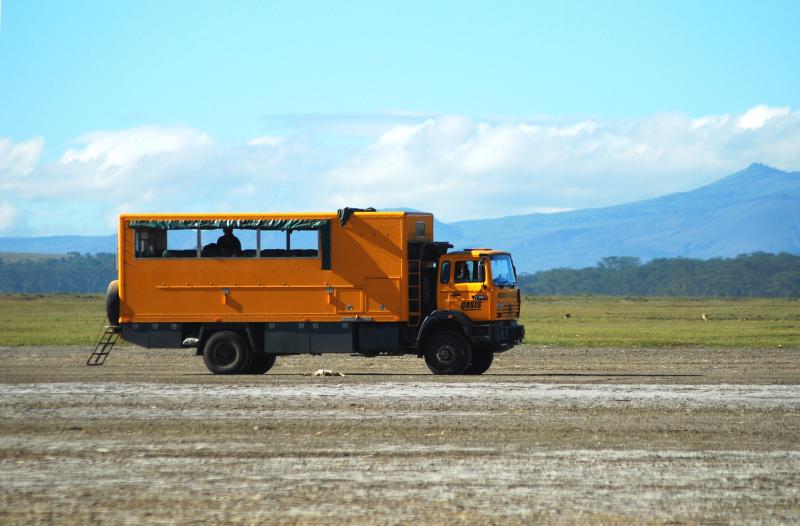
    All transport on Oasis Expedition Truck
    All road tolls and ferry crossings
    Camping and Cooking equipment
    Services of Oasis Crew

      excluded by

      Visas
      Local Payment of USD 3350 (2026), USD 3500 (2027), USD 3800 (2028) payable at the start of the trip
      6 Day lay-over costs in Cape Town
      Optional Excursions as listed in the Pre-Departure Information
      Serengeti safari and Gorilla trek add-ons
      Flights
      Sleeping bag & sleeping mat
      Airport Taxes & Transfers
      Travel Insurance
      Meals - approx. 35%
      Drinks
      Tips

        Detailed Description

        DAY 1 - 8 ACCRA TO LOME
        West Africa is a road less travelled and still a largely undiscovered area of Africa for tourism. Please understand that the first 9 weeks of your journey will be directly through this area of the continent and although we list our intended Itinerary below, please be aware that this is a rough guide and should be treated as such.

        Oasis Overland has run a Trans Africa Expedition virtually every year since 1997, and during this time, not one Trans Africa trip has run an identical itinerary through West Africa as far as Namibia.

        This is due to many reasons, including availability of visas, road conditions, embassy and border closures, political unrest, elections and instability, disease outbreaks, changing government travel advice and adverse weather conditions, just to name a few. We also hear about new, exciting places that may only now be possible to visit, and so try to include some new places on each trip for that reason too.

        Please therefore consider the itinerary shown as a guide and expect there to be some changes during your trip. This is all part of the experience of travelling through West Africa and one that makes this expedition such an epic journey that only a select few are willing to undertake.

        We will spend a number of days on the beaches near Accra where you can indulge in great seafood, and cold drinks. We will need to obtain several visas in Accra before travelling onto Togo.

        DAY 9 - 29 LOME TO LIMBE
        ​Travelling through Togo and Benin doesn't take long as they are only 50 miles wide. Voodoo is the main religion here, basing its beliefs in the power of the dead. You can visit an interesting fetish market, take a boat ride on lake Togo to Togoville, as well as sample good African restaurants in Lome the capital of Togo. We will be applying for some further visas for our onward travel in the capital.

        In Benin you can take local canoes out to Ganvie village - built on bamboo stilts on Lake Nakoue.

        Next we enter Nigeria, Africa's most populous country with well over 100 million people. The pace of life here tends to be more hectic than we have become used to on our overland adventure, full of hustle and bustle. Making our way east, our route will depend on whether we need to apply for any visas and which border crossing into Cameroon is open. Subject to our route, we may have the opportunity to visit a Drill Monkey and Chimpanzee rehabilitation centre, a project dedicated to rehabilitating and breeding drills, a primate closely related to baboons and mandrills, to be released back into the wild.

        Moving through mountainous and lush jungle, we enter Cameroon. Again, depending on which route we can take, we will travel to the foothills of Mount Cameroon, to spend a few days camping near Limbe and 6 Mile Beach. From here you can choose to trek up Mount Cameroon, visit a chimpanzee orphanage or relax on the beach.

        DAY 30 - 46 LIMBE TO CONGO
        ​After chilling out on the beach, or if you were brave enough to tackle the mountain, we head inland to the capital city of Yaounde, where we may apply for a couple more visa's. You can sample fresh bread and amazing pastries from the countless bakeries, admire the roadside fresh flower stalls, or stock up on some supermarket treats! Bursting with art galleries, museums and various markets, this is an ideal place to restock your snack store and prepare for the demands of central Africa.

        When we depart city life, to travel south on the more rugged roads! We drive through lush jungle scenery, passing the occasional waterfall, before eventually reaching the lively market town of Ambam. Here we can replenish our food supplies before crossing the Ntem River into Gabon, a country that consists mostly of tropical rain forest. Our next stop is the beautiful Lope National Park, home to a population of elephants, buffalo and the famous central Africa drill monkeys. After a safari through the savanna lands, we continue south along dirt and mud roads toward the Republic of Congo. Along this leg of the Trans Africa overland trip we may encounter some challenging road conditions and situations on the whole of the route. Team work will definitely be needed if we are to tackle what may lay ahead - from clearing paths through water logged pot holes the size of the truck to only travelling a couple of miles in a day over wet and unkempt mud roads. These are some of the best memories you will take away with you.

        DAY 47 - 55 CONGO TO MITADI
        ​​One of the main highlights for most people who visit Congo is the friendliness of the people, particularly in the countryside. The open delight and welcome we receive while driving through these remote villages is really touching. While the first section of roads are rough dirt, once we reach the sealed roads it's a fast run towards the town of Dolisie.

        From Dolisie we will make our way west towards the ocean city of Pointe Noire. Two contrasting areas, the African quarter - where we see traffic jams, crowded streets and a bustling Grand Marche (market), the European Quarter quite the contrast with beach side bars and restaurants, noticeably oil is the source of the wealth. You will have time to explore the cities museums, railway and cathedrals or relax on the beaches. Departing Congo a transit through Cabinda, an exclave and province of Angola will bring us into Democratic Republic of Congo (formerly known as Zaire). Sandy tracks will eventually lead us into Muanda. Again tourists are foreign to this region and we attract attention everywhere we travel, dirt roads and potholes will direct us over the Congo River to the city of Mitadi and the gateway to Angola.

        DAY 56 - 66 MITADI TO NAMIBIAN BORDER
        Angola is still recovering from over two decades of civil war. As we travel south through the many small villages and communities - local people - especially children may never have seen a foreigner before. Military tanks litter the side of many roads in places. The country is slowly rebuilding its infrastructure and basic needs - with the capital of Luanda showing full sign of this slow progression. As Portuguese is the preferred language and hardly anyone we encounter will speak English - a lot of humorous improvisations with hands, face and voice are usually needed by all of us. After the southern town of Lubango and home to 'Christo Rei' a shrine overlooking the city as Christ the Redeemer looks over Rio, we head to the Namibian border for the next instalment of our Trans Africa overland adventure.

        DAY 67 - 85 NAMIBIA TO CAPE TOWN
        ​Crossing into Namibia and into the region of the Owambo people - we pass through the country's second largest town - Ondangwa. This town is one of the main suppliers of beer to Northern Namibia - hopefully there will be enough left for us!

        We continue towards Etosha National Park - recognised as one of the world's greatest wildlife viewing areas. The semi desert is quite a contrast to the more fertile terrain we have been used to. Besides game drives we can also game watch by night at one of the floodlit water holes where we may well spot Rhino, Elephant and Giraffe among a host of other wildlife. From Etosha we visit a local Cheetah park before continuing on to the Brandberg Mountains in Demaraland.

        We then travel to the stunning Spitzkoppe Rock formations. Known as the Matterhorn of Namibia, the Spitzkoppe is part of the Erongo Mt range and was formed over 100 million years ago after the collapse of a gigantic volcano. The scenery is striking from every angle - even more stunning as the granite massifs turn red at sunset.

        Next stop is the world famous Cape Cross Seal Colony, where the sight of thousands of these mammals, as well as their accompanying pungent odour is remembered by all! The Cool Atlantic Ocean and the prominent Benguela current provide a perfect location for feeding and breeding for the Cape Fur Seal.

        For the next three days, our Africa overland trip will be based in Swakopmund - Namibia's adventure gateway. You can choose between a variety of activities and excursions here: spend a day deep sea fishing for shark and other game fish or head out to the desert and try quad biking and dune sledding. You can also go horse riding or get a birds eye view of the dramatic coastline - either by Sky diving from 10,000 feet or take a flight over the towering sand dunes in the area. In Swakopmund itself you can walk along miles of deserted beaches, visit the museum or relax in a cafe.

        A one day drive takes us to the Namib-Naukluft Park, a vast expanse of desert which contains some of the highest sand dunes in the world. At Sossusvlei we stop and explore this spectacular area and red dunes. Continuing south we enter the semi-desert, and wide-open countryside of cattle ranching until we arrive at one of Africa's most sensational natural features, Fish River Canyon. We stop here for a couple of hours to take in the awesome scenery.

        A couple of hours drive away we enter South Africa and cross the Orange River - a rich source of diamonds. We travel south through the Cederburg Wilderness Area, an area of rugged valleys and peaks - before getting to our final destination on this African adventure; the vibrant and cosmopolitan city of Cape Town. Our accommodation here will be in a backpackers hostel.

        DAY 86 - 91 CAPE TOWN
        Cape Town is one of the favourite stops on our Trans Africa overland trip as there is plenty to do in and around the Mother City, from climbing up Table Mountain to abseiling down it, diving with sharks (either in ocean cages - or at the Two Oceans Aquarium), scuba diving courses, a tour to Robben Island or a chance to revamp your wardrobe and head out on the town to one of the many hot-spots that Cape Town has to offer. Those on the 22 week trip from the UK leave us here, whilst others will join to continue the trip to Nairobi and Cairo.

        This free time in Cape Town is at your own cost, so you can decide what you want to do and where to stay! There may be less time here depending on any delays on the trip down from Accra.

        DAY 92 - 100 CAPE TOWN TO LESOTHO
        We depart from Cape Town taking a leisurely drive along the coastal road to the quaint coastal town of Betty's Bay in the Overberg and visit Stony Point Nature Reserve, home to a unique colony of African (Jackass) penguins. The Penguin Colony is one of only three mainland-based colonies in South Africa and for this reason it is treasured.

        We overnight in Hermanus/Gansbaai and the next day there are a number of marine options- Whale watching, Shark Cave Diving and Dyer Island Nature Reserve. From here we will head for the most southern tip of Africa at Cape Agulhas - which is the dividing line between the warm Indian Ocean and the cooler Atlantic Ocean. The seas around Cape Agulhas are very treacherous and have caused numerous shipwrecks. To help reduce fatalities the Cape Agulhas Lighthouse was built in 1848 and is the 2nd oldest working lighthouse in South Africa. From August to December Southern Right and Humpback Whales may be spotted along the coast - as they feed in the nutrient rich waters off the southern coast.

        From Cape Agulhas we pass through the Outeniqua Mountains to the Little Karoo - we will visit an Ostrich farm to learn more about the worlds largest bird. The Ostrich has been around for 8 million years and a feather was actually discovered in King Tutankhamun's tomb in Egypt. 97% of the world's population of Ostriches lives in the Karoo.

        We will also explore Cango Calcite Caves recognised as one of the world's finest network of Calcite caves. The bizarre formations of Stalagmites and Stalactites represent over a million years of slow formation.

        We spend two days winding our way along South Africa's famous Garden Route where there is a wealth of things to see and do. We travel through the popular resort of Knysna, located on a tranquil lagoon that is protected from the sea by two enormous cliffs known as 'the heads'. We visit the Tsitsikamma Forest, where you will be able to hike along the coast and view the crashing waves at the mouth of the scenic Storms River, and maybe spot dolphins and whales in the ocean. Optional excursions in this region include mountain biking, black water tubing, and the mother of all bungee jumps at Bloakrans Bridge - the highest jump in the world at 216 metres.

        From the Garden Route we head inland to Addo Elephant National Park which has recently been extended to include part of the coast and is now home to the BIG 7 - lion, rhino, elephant, leopard, buffalo, whale and shark! On our game drive we hope to spot some of the many elephant that the park is famous for, which are the most southerly population in Africa.

        Heading north we make our way towards the mountain Kingdom of Lesotho.

        DAY 101 - 109 LESOTHO TO ESWATINI
        Lesotho, often referred to as 'the kingdom in the sky'. This little country is completely surrounded by South Africa and is covered by mountains from 1000m to 3000m high. The scenery here is tremendous and the mountain air crisp and fresh. Here we will see Lesotho's horsemen dressed in their blankets and gumboots trotting around the hillsides. We spend a couple of nights at Malealea Lodge, Lesotho's most famous countryside retreat tucked up high in the mountains. Here there are isolated waterfalls, cool rock pools ideal for swimming, and peaceful hikes in the surrounding hills. This is also a great place to try pony trekking - one of the best ways to enjoy the scenery is atop a sure footed Lesotho pony.

        We drive through the lowlands of Lesotho and visit Thabo Bosiu or Mt. Moorosi with a local guide (time & weather permitting). This mountain stronghold was the home of Chief Moshoeshoe, the founder of the Basotho nation. We continue through Lesotho's tiny capital Maseru, and re-enter South Africa.

        Royal Natal National Park on the edge of the Drakensburg Mountains has an impressive natural Amphitheatre of massive rock walls. The Tugela River plunges spectacularly over the edge of the Amphitheatre wall, dropping around 800m through a series of five falls. There are over 130km of walking trails around the park-many of which are easy, half day strolls, through beautiful countryside of grassland dotted with patches of yellowwood forest and proteas set against the stunning backdrop of the Amphitheatre.

        Heading east now, we reach the coast and the small town of St Lucia, famous for having the largest estuary in South Africa, plus the country’s highest concentration of hippos and crocodiles. Indeed the hippos can sometimes be seen walking through the streets at night. Boat trips to see the hippos and more wildlife are available, as well as safaris into the nearby iSamangaliso wetlands and Hluhluwe/iMfolozi National Park. Next we head north for the tiny country of Eswatini

        DAY 110 - 117 ESWATINI, KRUGER AND MAPUTO
        While in Eswatini we visit the Miliwane Wildlife Sanctuary from where you can take walking, horseback or mountain bike safaris amongst the abundant wildlife. Another hike is available at Sibehe Rock, one of southern Africa’s most impressive geological features.

        From Eswatini we head into the southern extent of the iconic Kruger National Park to search for the Big 5 in one of the world’s best wildlife areas. We will also drive part of the Panorama Route before crossing into Mozambique.

        Our first stop is then in the lively capital Maputo, which is home to Portuguese colonial architecture, a fortress , cathedral and art museum all worth visiting. In the evenings we can take advantage of Maputo’s reputation as one of the best places to go out in southern Africa, visiting some of the salsa bars, sidewalk cafes and nightclubs.

        DAY 118 - 122 MAPUTO TO VILANCULOS
        Leaving Maputo we head up the coast to the port towns of Xai-Xai which sits by the banks of the Limpopo River. There are good beaches with a coral reef just off shore providing protected swimming and snorkelling waters. The popular town of Vilankulos is next and we spend a few days here relaxing and taking advantage of the activities on offer. These include local dhow cruises, and snorkelling and diving safaris into the Bazaruto National Park. This can be a good place to see manta rays, whale sharks, turtles and hump back whales in season. It is also one of the few sites where the rare Dugong lives.

        DAY 123 - 132 VILANCULOS TO BULAWAYO
        Zimbabwe is our next destination, and Gonarezhou National Park, named ‘The Place of Elephants’. As well as over 11,000 elephants, the park hosts a wide range of other wildlife that can be seen on safari.

        We make our way through the Eastern Highlands of Zimbabwe, and visit Chimanimani National Park where you have the opportunity to take a hike through the mountain wilderness area, or hike to the nearby bridal veil falls, or simply enjoying the stunning surroundings from this sleepy village whilst strolling through the village market. We may also have time to visit Vumba Botanic Gardens.

        Another stop is at the Great Zimbabwe Ruins, once the greatest medieval city in Sub Saharan Africa and where the name Zimbabwe is derived, literally meaning house of stone. We then travel across Mashonaland to Bulawayo where you have the option for a day to venture into Matobo National Park with a local safari company. You will have a unique chance to get out on foot to try and spot the elusive Black Rhino - amongst other game. There is also the opportunity to visit Cecil Rhodes' grave and Ancient Rock Paintings.

        DAY 133 - 141 BULAWAYO TO THE OKAVANGO DELTA AND CAPRIVI STRIP
        We leave Zimbabwe and cross into Botswana, first passing the town of Nata with its bird sanctuary and then driving past the Nxai Pan National Park and Makgadikgadi Pans National Park. These salt pans are the largest in the world, and an eerie and awe inspiring sight.

        We’ll continue on the Trans-Kalahari highway towards Maun, the gateway to the Okavango Delta. Here you will have an opportunity to leave the truck to venture into the Okavango Delta. Local poler guides will navigate the extensive waterways using canoes similar to their traditional Mokoro's (dug out canoes). This is a great experience - and the best way to have a chance of seeing the elusive wildlife of this unique desert oasis. You will have a number of opportunities to go on game walks with rangers - giving you the chance to see elephant, crocodile and hippo up close and personal. The Okavango Delta is one of the world's largest inland waterways and its calming serenity will leave those who experience it feeling supremely relaxed. There is also the opportunity to experience the heights of African adventure travel too: see the delta from the air during an hour-long flight.

        From Maun we head north and cross into Namibia and explore the Caprivi Strip. This is a narrow strip of land between Botswana and Angola & Zambia, comprising the head of the Okavango Delta where more boat trips and safaris are available. Heading east we re-enter Botswana and spend the night on the outskirts of the Chobe National Park - famous for its hordes of Elephants, as well as an abundance of other wildlife. You will have a chance to spend the afternoon on the Chobe River - a less intrusive way to view game and wildlife - as well as the Namibian frontier across the river. Crossing into Zambia - we stop for several days at Livingstone, right next to one of the adventure playgrounds of the world - Victoria Falls.

        DAY 142 - 149 VICTORIA FALLS TO LILONGWE
        There is something here for everyone in Victoria Falls; A day trip over the Victoria Falls bridge to view the falls from Zimbabwe, Flight of Angels - a great way to get a birds eye view of the falls in a light aircraft or helicopter, Sunset Boat Cruises or a more sedate Canoe trip, to the adrenaline packed Gorge Swing, Abseil or a chance to experience one of the highest commercial Bungee Jumps in the world.

        After your adrenaline has been spent, we will head north through Zambia to Lake Kariba which is the largest artificial lake in the world, and also has the biggest man-made dam on the planet too, 226km long and up to 40km wide! At Siavonga there is the option to spend the night on a houseboat on the lake, watching over crocodiles and hippos and perhaps doing some fishing.

        Further north we stop at South Luangwa National Park which has one of biggest concentrations of wildlife in all of Africa, especially around the Luangwa River and its oxbow lagoons. The park is well known for its walking safaris, and one of the few places you can get up close with such a wide range of wildlife in Africa on foot.

        We leave Zambia now and cross into Malawi.

        DAY 150 - 161 LILONGWE TO ZANZIBAR
        Our first stop in Malawi is the capital Lilongwe in the south of the country where we stop for the night. This will give you the opportunity to post gifts home or check out the local markets.

        Passing through lush mountainous landscape and plantations we are soon following the coast of Lake Malawi - the country’s most dominant natural feature. Camping in Malawi sums up the spirit of an Africa overland trip with Oasis. We spend several days at friendly laid back campsites where most people choose to relax on the sandy beaches or try their hand at scuba diving , snorkelling or windsurfing as we follow the lakeshore north. If you are more inclined to just relax - then there is no better place than on the shores of Lake Malawi. This really is a warm friendly country - making it easy to wander off and meet up with your local hosts in one of the many villages or schools nearby. You can view first hand the talent of the local artisans and purchase some exquisite pieces of furniture and carvings out of ebony and mahogany.

        The next country on our journey is Tanzania, and after a day and half drive we pass through the peaceful Mikumi National Park. African safari travel is synonymous with wildlife, and in this national park we usually see Elephant, Giraffe, Zebra and Antelope from the roadside. From here we continue travelling through the interesting and mountainous hinterland of Tanzania.

        Our route north then brings us to Dar Es Salaam where our truck is based in a campsite on a beautiful Indian Ocean beach. From here you will take the ferry out to Zanzibar Island for four nights and venture into the narrow bustling streets of Stone Town and its famous spice markets, old slave forts and dungeons. There is also time to relax on Zanzibar's famous white beaches, scuba dive or snorkel and swim with dolphins- before returning to Dar Es Salaam.

        DAY 162 - 167 DAR ES SALAAM TO ARUSHA AND THE SERENGETI
        After leaving Dar Es Salaam we pass a number of small towns and villages along the way and, if we are lucky, we may see the towering peak of Kilimanjaro. We will stop off at Marangu where you have the opportunity to climb to Kilimanjaro base camp or take a walk through the lush surroundings passing through coffee plantations, rivers, waterfalls, caves and visiting a local blacksmith (there is not time to do the full summit climb unless you miss the Serengeti safari option).

        We then continue to Arusha, and while at our camp on the outskirts of Arusha you have the option to book an add-on and travel with our local African safari partners through the Ngorongoro Crater and the Serengeti National Park. In these parks you will have the opportunity to view the abundant wildlife including Elephant, Lion, Cheetah, White Rhino, Buffalo, Hippo, Antelope, Crocodile and Pink Flamingos and of course the famous migrating Wildebeest. For those who wish - there is an option to visit a local Maasai Village and learn about their culture and way of life.

        DAY 168 - 177 ARUSHA TO KIGALI VIA BURUNDI
        Our route takes us west now, passing to the south of Lake Victoria and after a couple of bush camps we arrive into Burundi. We will stop at Gishora Village to see and hear more about Burundi’s famous drummers. These drums were symbols of power during the monarchy, beaten during special events and are an important part of the country’s heritage. We then arrive at Bumumbura, a port city on Lake Tanganyika, where the country’s main export, coffee, is shipped from. Boat trips through Rusizi National Park here provide viewings of crocodiles and hippos as well as many water birds. The lake also has many beautiful beaches and laid back villages to explore.

        Leaving Burundi now, we cross into Rwanda and drive to the capital Kigali where you can visit the Genocide Memorial

        DAY 176 - 182 KIGALI TO KAMPALA, GORILLA TREK
        The hills of Rwanda are next, as we spend a couple of days at the small, friendly town of Musanze on the edge of Volcanoes National Park. Here you can take optional treks into the forest to see the famous Golden Moneys, visit the Musanze caves and several hiking trails, or take a village tour throughout the area where you can see first hand production of local Banana beer.

        We’ll then head out of the hills and cross the border into Uganda, where our first stop is at the village of Kabale which will give you the opportunity to trek the Mountain Gorillas and visit the beautiful Lake Bunyonyi.

        Bwindi Impenetrable Forest National Park and Mgahinga Gorilla National Park are home to several families of Highland Mountain Gorillas. Getting up close to these amazing creatures is a truly a once in a lifetime experience and one of the highlights of the trip. You have the opportunity to trek to see the Gorillas in Uganda (bookable as an Add on). It is estimated that only around 700 of these gentle giants remain. This mountainous area on the borders of Rwanda, Uganda and Zaire (now renamed Democratic Republic of Congo) is their only natural habitat and they are periodically threatened by poachers and political instability in the area. One permit allows you to spend about 50 to 60 minutes with one of the gorilla families. Trekking to find them in groups of 8 people can take anywhere from half an hour to 5 hours. The organisations and well-trained guides that continually monitor and protect the families are conscientious and responsible.

        (Due to the popularity of Trekking to the Mountain Gorillas and the limited availability of obtaining Trekking Permits, those booking late may need to do the Gorilla trek in Rwanda in Volcanos National Park, which may come at an additional cost - you will be advised in advance).

        We head East again now, and spend a night at Lake Mburo National Park, perhaps taking a nighttime safari drive, before driving onwards through swamps, patches of forest and fertile green countryside. As we travel through Uganda, we'll pass through a number of small towns and villages; Mpigi, where you will see roadside stalls manufacturing and selling traditional musical instruments; Kyazanga, where we can buy fresh rotisserie and roasted meat and vegetables, as well as roasted plantain bananas. We will also be able to make a photo stop where our route crosses the Equator on the way to Kampala. Kampala has had a turbulent past, but these days it is a friendly and safe city. We have some free time to spend in local cafes and nightspots - where you can get to know the local people.

        DAY 183 - 190 KAMPALA TO NAIROBI VIA THE MASAI MARA
        We camp next near Jinja - Uganda's adventure playground. Here, on the edge of Lake Victoria, the Nile begins its 6700km journey to the sea. We spend the next few days downstream from the source of the Nile. This is a spectacular area, and a superb place to go whitewater rafting or kayaking. You can also organise quad biking , horse riding or a visit to a local education project.

        Our next highlight is the spectacular Sipi Falls. There are three waterfalls here on the Sipi River as it cascades into the Kyoga Basin from the slopes of Mount Elgon. The highest is just under 100m and there is an exciting abseiling option available here. After leaving the Sipi Falls we cross into Kenya and Lake Nakuru National Park - home to a wide variety of wildlife including Black Rhino, Hippo, Lion, Leopard, Hyena and Giraffe. However, Nakuru is a soda lake and most famous for its pink inhabitants, a flock of almost a million Pink Flamingos which feed noisily along the shoreline.

        Finally, the group will all go on a morning and afternoon game drive in 4x4 safari vehicles with local guides in one of the world's most famous National Parks, the Maasai Mara. Here you will have the opportunity to look out for all its incredible wildlife before making our way back to Nairobi, arriving in the early evening.

        DAY 191 NAIROBI
        Your adventure will finish after breakfast.

        There is plenty to see and do in Nairobi - why not ​get up close to Africa’s tallest mammal at Langata Giraffe Centre or visit the David Sheldrick Elephant Orphanage, where Oasis sponsor Kamboyo, an orphaned elephant
        Duration: 191 days 
        From  £6995.00